IRAN UPDATE: A BALANCED ASSESSMENT


While details have been sparse, the Trump administration announced this week that it is close to reaching an agreement with Iran to extend the ceasefire for another 60 days and begin more formal negotiations to end the war.
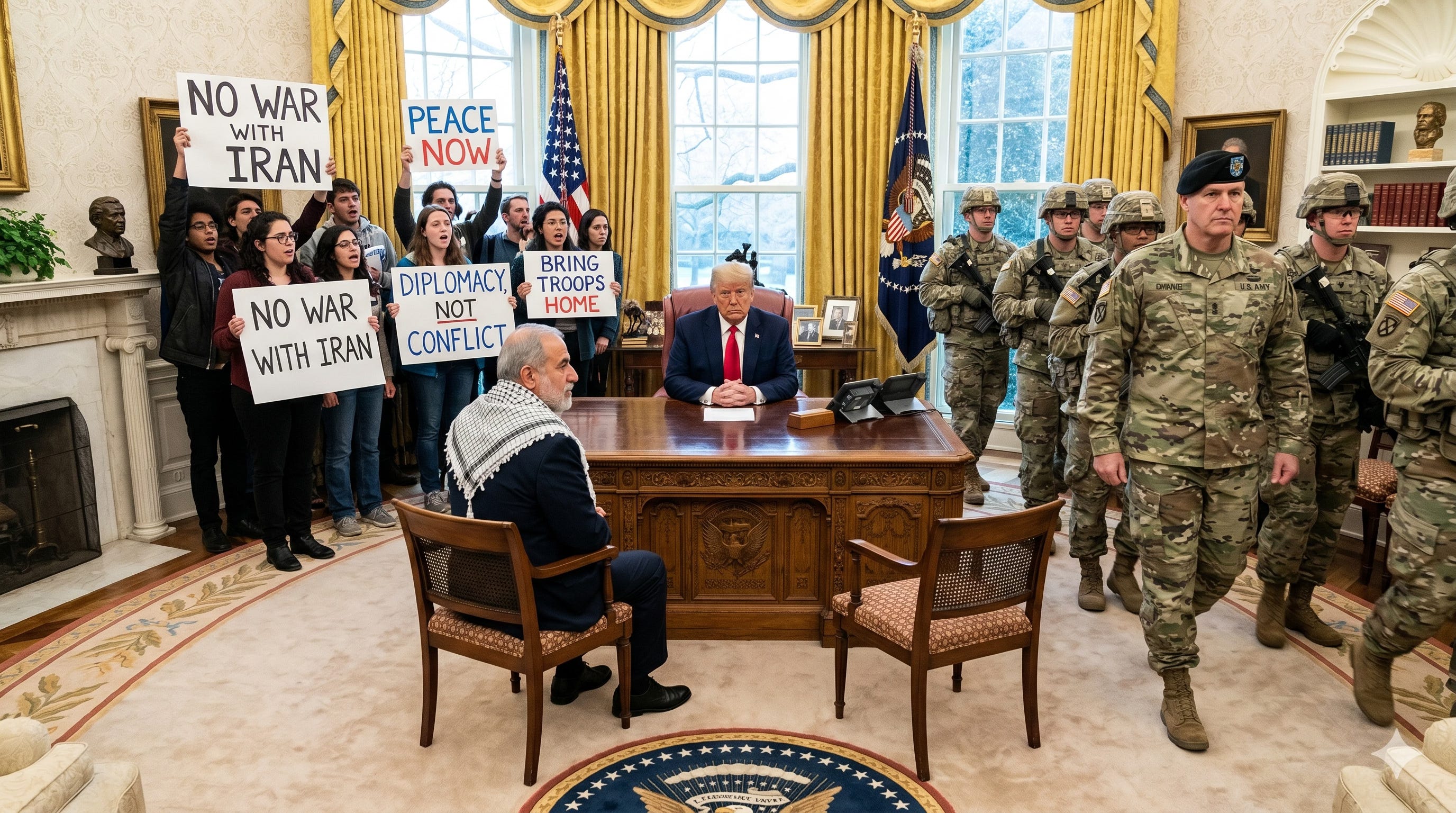
On The Daily podcast, liberal critics at The New York Times criticized the war for handing Iran the Strait of Hormuz as a new geopolitical weapon and claimed that, even if negotiations lead to a re-opening of the Strait, we will be no better off than we were before the war.
Hawkish conservatives, like former Army General and current Fox News analyst Jack Keane, who have advocated for seizing strategic Iranian territory have expressed disappointment the president failed to take more forceful action in pursuit of a more decisive outcome.
My own view is that each of these viewpoints is flawed. So, let’s dig a bit deeper with the goal of developing a more balanced perspective.
The Critics at the New York Times
In the early 2010s, the Obama administration reacted to Iran’s rapidly developing nuclear program by imposing harsh sanctions. Iran responded by threatening to close the Strait of Hormuz. After organizing an international flotilla as a demonstration of strength, Obama then sent a team to the Middle East to engage in covert negotiations with Iran. When news of the backdoor talks leaked out, the administration provided misleading information about the timing of their secret talks and then claimed that dangerous advances in Iran’s nuclear program were the sole trigger for the negotiations.
Later, however, it emerged that the original talking points for the secret meetings included the Strait of Hormuz. Furthermore, the idea that sudden nuclear developments were the sole factor forcing the negotiations made no sense: dangerous advancements in Iran’s nuclear program were the very reason Obama imposed harsh sanctions in the first place. And, if it were only about the nukes, why did the administration try and hide their negotiations and then, when word leaked, fudge facts about the timing and sequence of events?
Obviously: the critics at The New York Times are wrong to claim that Trump’s war has somehow handed Iran a new geopolitical weapon. Rather, Iran has long known the Strait is one of its primary tactical weapons in any geopolitical confrontation, which is why it mined the Strait during the so-called “Tanker War” of the 1980s; why it threatened to do so in three separate nuclear-related diplomatic crises (2008, 2010, and in 2019); and why it reacted to Epic Fury by doing so.
Further, The Times claim that, at best, Trump’s current negotiations will reopen the Strait and merely put us back in the same position we were in before the war ignores the enormous damage the war has done to their military capabilities. In short, the war has severely crippled Iran’s ability to develop nuclear weapons, to project power, and to defend itself. Even if current negotiations “only” accomplish the re-opening of the Strait, this alone hardly represents a return to pre-war conditions.
The Hawks at Fox News
I share the view that the Middle East is ripe for change and that a decisive victory in Iran could reset the regional and geopolitical tables for decades to come. Trump’s growing history of military intervention, including Operation Epic Fury, demonstrates he is not afraid of taking measured action to make the world a safer place for America and our allies. Nevertheless, we have now been in a ceasefire for longer than we were at war, which tells us the president clearly believes a diplomatic solution – if acceptable terms can be negotiated – presents a better risk/reward tradeoff than an invasion. Given the history of the Middle East, it is hard to find fault with this view.
Part of this hawkish viewpoint derives from the conventional wisdom that historic victories are unattainable without putting boots on the ground. But what about Ronald Reagan’s victory in the Cold War, which was achieved by exploiting the inherent weaknesses of the Soviet’s politically-controlled economy? My preference would be for us to continue to enforce the blockade with the objective of accelerating the financial meltdown that Iran’s politically-controlled economy was already experiencing before the war. There are economic costs associated with this approach, but given the regime’s horrific history, the magnitude of the regional and geopolitical opportunities, and the importance of minimizing causalities, these costs seem both manageable and worthwhile.
A More Balanced Perspective
Depending on how negotiations proceed, we could still end up with an extended blockade, perhaps combined with further targeted air strikes. But, recent posturing aside, Trump seems eager to achieve a negotiated settlement that will reopen the Strait, reinvigorate the global economy, and allow us to bring our troops home. Furthermore, only the president and his team are in a position to fully evaluate the effect of the on-going war on our own military resources and on other risks such as Taiwan and Ukraine. And, finally, like it or not, the president has to take domestic politics into account – if he loses too much support, his ambitious agenda will be threatened.
I’ve previously paraphrased Warren Buffett’s mentor (Ben Graham), by noting that short-term perceptions of war are like a voting machine but longer-term opinions are more like a weighing machine. At this point, both politically driven condemnations and declarations of decisive victory are still premature. In the end, Americans will evaluate Operation Epic Fury through what we might call the rough logic of a simple question: did it make America, the Middle East, and the world a safer place at an acceptable cost? Given the war’s remarkable military accomplishments, there is clearly room for continued optimism; but the weight of history’s final judgment will dependent on what exactly Trump is willing to concede to reopen the Strait and further degrade Iran’s nuclear capacity.
Stay tuned.
Today we face important challenges, but none that are greater than those we have overcome time and again throughout our storied history. Here’s to hoping your day is as bright as America’s future.
- Todd, May 31, 2026
If you found this helpful, please recommend it to at least one other person.
Subscriptions are currently FREE – if you’re not already a subscriber, sign up below.
These posts are now available in a podcast format as well, just search my name and On Wealth and Progress on major platforms.
If you’d like to learn more, visit my website: toddsheetswriter.com
To purchase a copy of my book, 2008: What Really Happened, please go to Amazon.com, barnesandnoble.com, Bookshop.org, or encounterbooks.com.